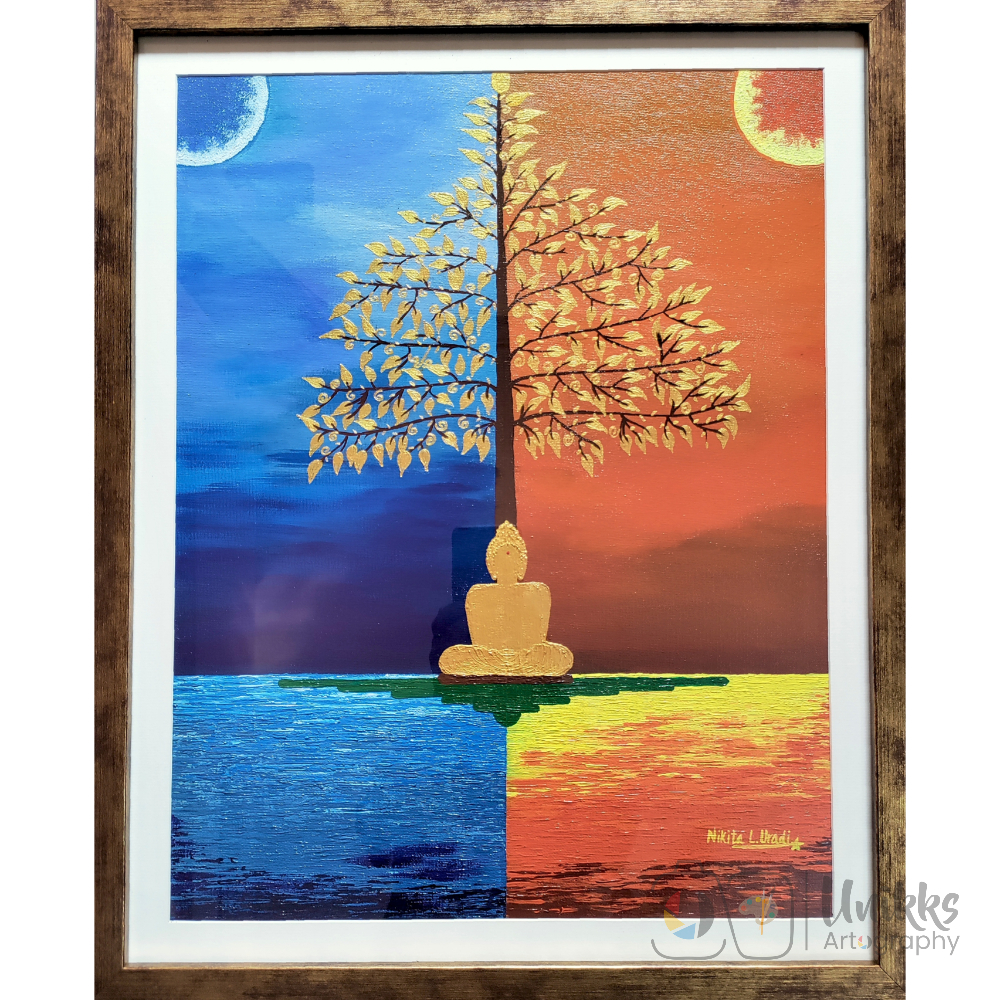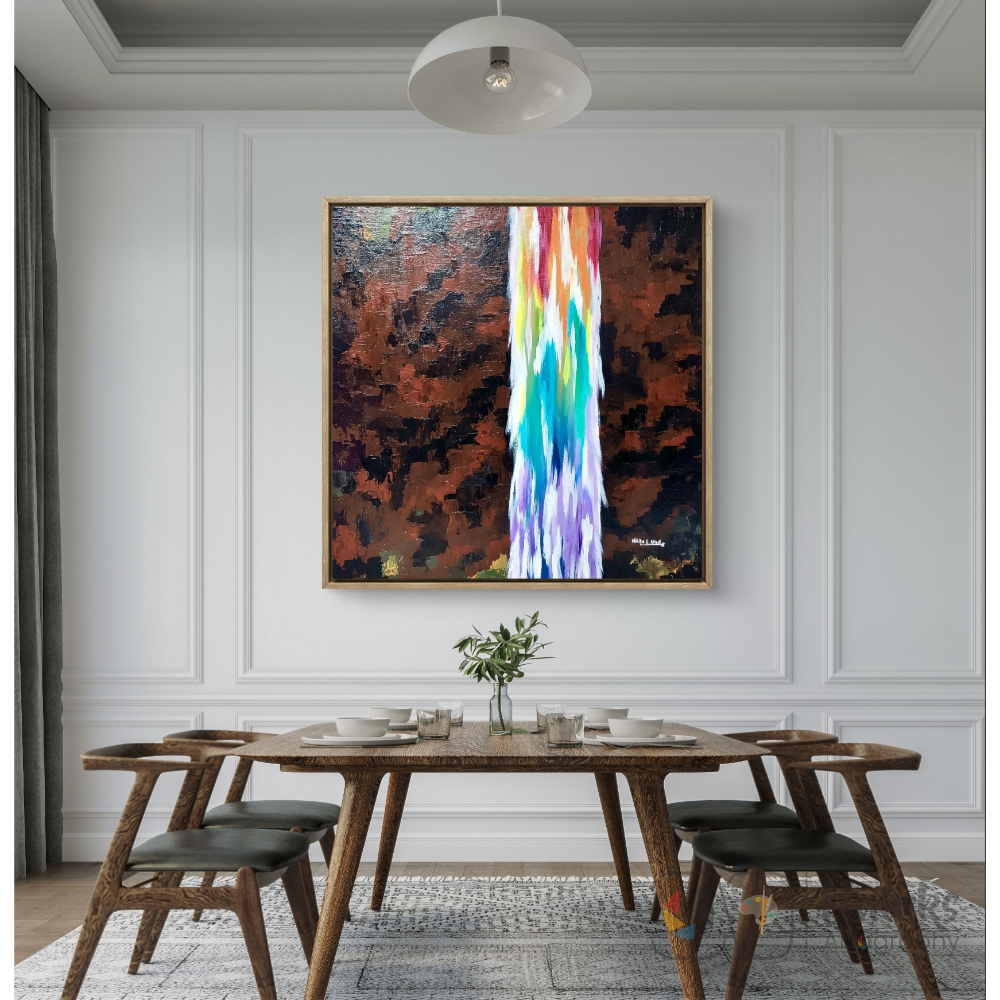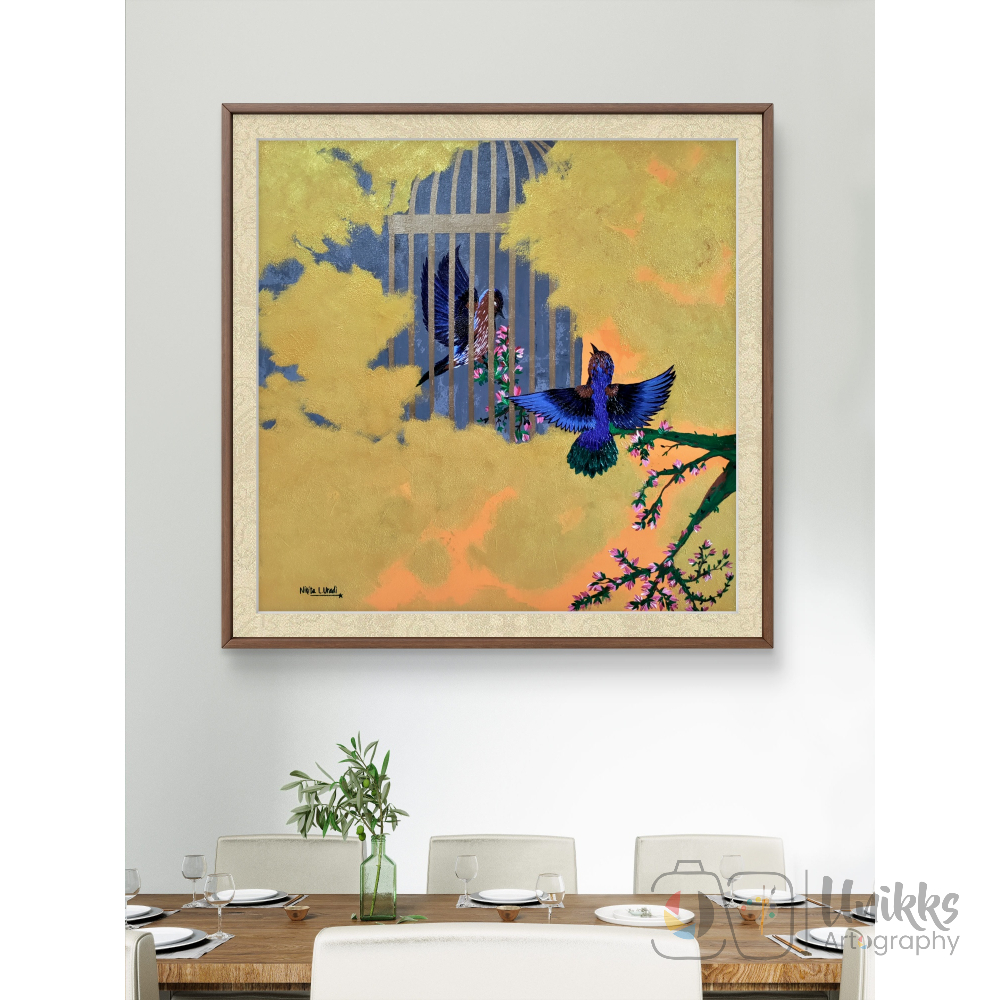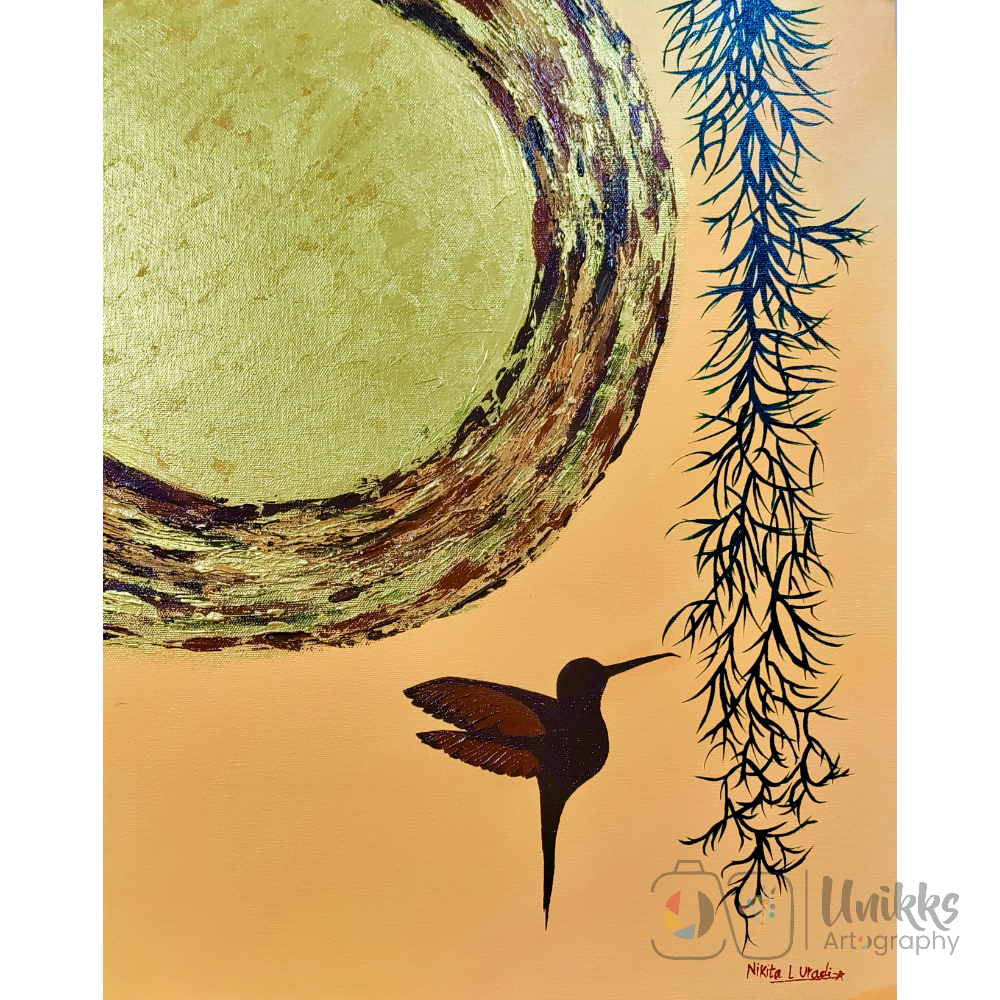

The viewer is invited to reflect on their own experiences of desire and wisdom, contemplating the idea that, perhaps, the “grass” one sees on the other side—whether it be a different life path, a new relationship, or an unfamiliar place—might indeed be greener, or maybe just a different hue altogether. The position of the two landscapes serves as a powerful reminder of the complexity of human emotions and the ever-present yearning for change. Overall, “The Grass is Greener on the Other Side” is a captivating visual narrative that resonates on multiple levels, encouraging introspection and inviting viewers to embrace both the familiar and the unknown in their own lives.